Journal
Class and NCVS Basics for Indonesian Wooden Charter Boats
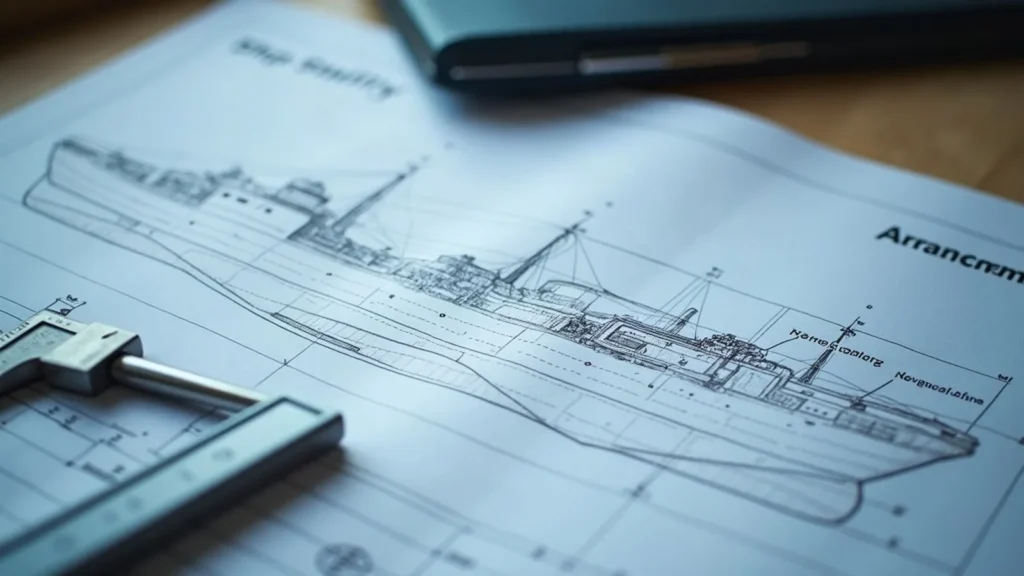
Most Indonesian liveaboards sit below the international convention thresholds, which puts them squarely inside the Non-Convention Vessel Standard. Understanding what NCVS covers, and how classification interacts with it, is what separates a vessel that can carry paying guests from one that cannot.
The two systems and how they differ
Classification is independent technical verification against a published rule set, carried out by a classification society. Biro Klasifikasi Indonesia is the Indonesian society, and international societies also class vessels here where an owner or insurer requires it.
NCVS, the Non-Convention Vessel Standard, is the Indonesian regulatory standard applied to domestic vessels that fall below the thresholds of the international SOLAS conventions. It is a regulatory regime rather than a voluntary verification, and for most Indonesian liveaboards it is the standard that actually governs.
What NCVS covers
The standard addresses the areas that determine whether a vessel is safe to carry people: construction and structural adequacy, stability, life-saving appliances, fire protection and detection, machinery and electrical installations, and equipment carriage.
For a timber charter vessel, the two that most often drive design changes are stability and fire. Both are much easier to satisfy in a general arrangement drawn with them in mind than in one designed for guest experience alone and assessed afterwards.
- Structural adequacy for the intended service
- Stability, including loading conditions the vessel will actually operate in
- Life-saving appliances appropriate to persons carried and area of operation
- Fire protection, detection and escape arrangements
- Machinery, electrical installation and steering
- Navigation and communication equipment carriage
Why the decision belongs before design
Escape routes, fire boundaries, stability margins and structural scantlings are architectural decisions. Retrofitting them into a completed timber hull means cutting into structure that was planked over months earlier.
It is also a documentation problem. Verification bodies want to see structure during construction. A hull that was closed without inspection cannot later be proved to contain what the owner says it contains, regardless of whether it does.
The role of a naval architect
Traditional plank-first construction does not require a lofted frame set, and the hull form comes from the shipwright’s judgement. That is a workable method for a vessel that will never be assessed against a rule set.
As soon as the vessel must satisfy NCVS or class, someone has to produce stability calculations, scantling justification and arrangement drawings. That is naval architecture, and it should be engaged at the start rather than commissioned in a hurry when a verifier asks a question.
How this interacts with the operating licence
Vessel certification and the operator’s licence are separate things. The vessel needs certificates appropriate to its category and service; the company carrying paying passengers needs the commercial licence, with SIUPAL commonly referenced for sea transport companies.
A vessel with perfect certificates operated by a company without the licence is not compliant, and a licensed operator running an uncertified vessel is not either. Both halves have to be in place, which is why the ownership structure conversation and the certification conversation belong together.
Practical sequence
Settle intended use and ownership structure, confirm the applicable standard for the vessel’s size and service, engage a naval architect to design within it, build with inspection at defined stages, obtain vessel certificates, and operate under the licence held by the correct entity.
Running that sequence in reverse is the most reliable way to lose a season, and it happens often enough that it is worth stating plainly.
Keeping certification alive after delivery
Certification is not a one-off event. Certificates have validity periods, surveys recur, and equipment such as liferafts, extinguishers and EPIRBs has its own service intervals that do not align conveniently with the charter calendar.
Build a compliance calendar during the first month of operation, listing every certificate and serviceable item with its expiry, and schedule the work into the vessel’s maintenance windows rather than into the middle of a season. Operators who treat this as an administrative afterthought eventually cancel a charter because a certificate lapsed, which costs more than the survey ever would have and is entirely avoidable.
Frequently asked questions
What is NCVS and does my liveaboard fall under it?
The Non-Convention Vessel Standard is Indonesia’s regulatory regime for domestic vessels below the international convention thresholds, covering construction, stability, life-saving, fire protection, machinery and equipment. Most Indonesian timber liveaboards fall within it. Confirm the requirements applicable to your vessel’s size and service before finalising the general arrangement, because they affect layout and escape routes.
Do I need BKI class as well as NCVS compliance?
Not necessarily. Class may be required by the flag administration, the insurer or the charter market rather than by a single rule, so the answer depends on size, service and who you need to satisfy. Where class is likely, build to it from the start, because classification societies want to inspect structure during construction rather than after it is planked over.
Can an existing vessel be brought into compliance?
Sometimes, and it is a routine part of refit and conversion work. The cost depends on what has to be opened up and whether stability and fire arrangements can be satisfied within the existing hull. Start with a survey and a stability assessment rather than an interior plan, because those two determine whether the project is feasible at all.
Is NCVS the same thing as international SOLAS compliance?
No. SOLAS is the international convention regime for convention-sized ships on international service. NCVS, the Non-Convention Vessel Standard, is Indonesia’s national framework for the far larger population of vessels below convention thresholds, and most wooden charter boats operating domestically fall under it. Treating NCVS as a lighter local formality is a mistake; it drives stability, fire, life-saving and manning requirements with real survey consequences.
When does BKI class enter the picture for a wooden charter boat?
Classification with BKI or another society becomes relevant when an insurer, financier or flag requirement asks for it, or when the vessel’s size and service push it there. Class and statutory NCVS certification are separate tracks: one is a technical standard held by a classification society, the other is state law. Plan both from the design stage, because retrofitting either into a finished hull costs far more.
Talk to the Sulawesi Boat Builder desk
Send the vessel type, target length, intended operating area and your build or purchase window. We reply with the shortlist logic, the document set you will need, and the next verifiable step.
WhatsApp +6281139414563 · bd@juaraholding.com
Quotations, contracts and milestone schedules are issued in USD by PT Komodo Galangan Nusantara.