Journal
Planning Itineraries for Sulawesi-Based Liveaboards and Dive Boats
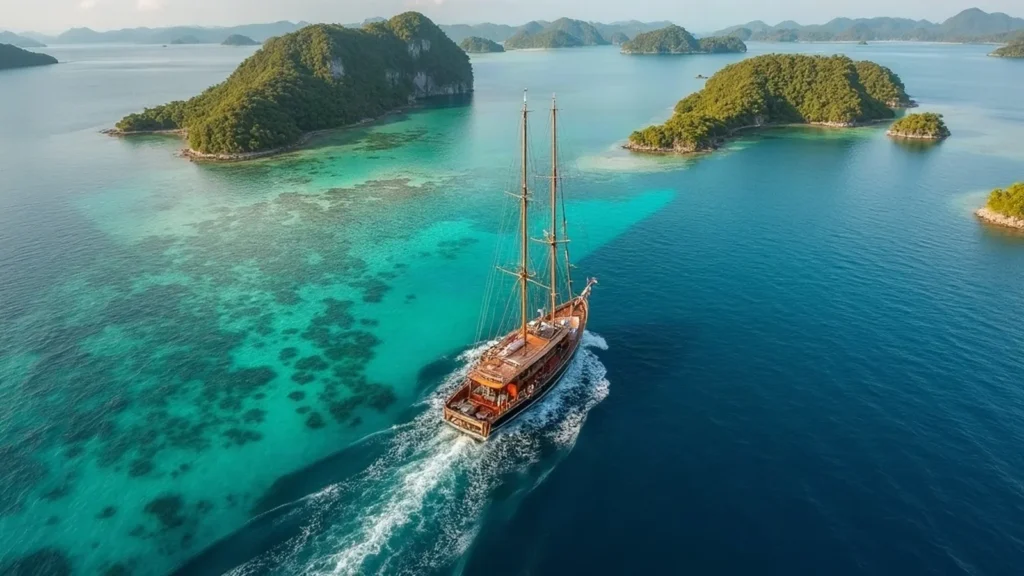
Itinerary design is a revenue decision, not a cruising preference. The route determines fuel burn, sellable nights, crew rotation, provisioning cost and which market you can reach. For a Sulawesi-based vessel there are real options beyond repositioning to Komodo, and they deserve to be evaluated properly.
The Sulawesi cruising grounds
Sulawesi’s own waters are underused by the liveaboard fleet, largely because the industry’s marketing gravity sits in Komodo and Raja Ampat. The island offers genuine diving and cruising in several distinct areas.
The Wakatobi archipelago off the south-east is an established dive destination. The Bunaken and Lembeh area in the north is internationally known, particularly for muck diving at Lembeh. The Togian Islands in the Gulf of Tomini and the Selayar and Takabonerate area south of the mainland offer further options with less traffic.
Repositioning versus staying
The default commercial decision is to reposition to Labuan Bajo and join the Komodo market, where demand density is highest and the distribution infrastructure exists.
The alternative is to build a Sulawesi-based product with less competition and a differentiated offer. That is a marketing problem more than a nautical one: it requires the operator to generate its own demand rather than plugging into an existing flow, and it should only be attempted by an operator with a genuine distribution capability.
Season shapes the route
Monsoon patterns determine which grounds are comfortable when, and a well-designed annual programme moves the vessel to follow the weather rather than fighting it. Repositioning legs should be revenue-generating where possible or scheduled into the maintenance window where not.
The mistake is designing a route as though the year were uniform. Sellable nights are concentrated, and a programme that ignores that will show a full calendar and a poor season.
The economics of a route
Every itinerary has a cost profile, and the variables that move it most are distance covered, port and park fees along the way, provisioning access, and how far crew rotation has to travel.
A route that looks attractive on a chart can be commercially poor because it burns fuel between sites, or because guest arrival requires two flights and a transfer that suppresses bookings. Airlift is a route design constraint, and it is the one most often ignored.
- Distance between dive or anchorage sites, which drives fuel and night passages
- Guest access: airport, flight frequency and transfer time at each end
- Park and port fees applicable along the route
- Provisioning points and how far they are from the cruising ground
- Crew rotation logistics and cost
- Shelter options if weather turns, which determines how robust the schedule is
- Where the vessel can be maintained without leaving the market
Designing the guest experience within the constraints
Once the commercially viable envelope is fixed, the experience is designed inside it. Site sequencing, night passages placed where guests will sleep through them, and pacing that does not put the strongest site on the last morning.
Good itinerary design is not about visiting the most places. It is about arriving at each site at the right time of day with a rested crew and guests who are not exhausted by transit.
Testing the route before you sell it
Run the itinerary once without paying guests, or with a soft-launch group, and log everything: actual passage times, fuel burn, where the schedule strained, where the crew was overloaded.
Every itinerary looks fine on a chart. The version that survives contact with weather, guests and a real crew is the one worth publishing, and the gap between the two is usually instructive.
Permits, parks and the paperwork of a route
Every cruising ground carries its own administrative overhead. Marine parks charge entry fees per guest and sometimes per vessel, some areas require notification or permits, and requirements change with more notice to locals than to foreign operators.
Build the permit and fee structure into the route model at design stage, and assign someone specific responsibility for keeping it current. An itinerary that is commercially attractive on fuel and airlift can be materially less attractive once park fees for a full guest complement are included, and an operator that discovers a permit requirement at the park boundary loses a day and a great deal of credibility with the guests on board.
Frequently asked questions
Can a liveaboard operate profitably from Sulawesi rather than repositioning?
It can, but it requires the operator to generate its own demand rather than joining the concentrated flow into Labuan Bajo. Wakatobi, Bunaken and Lembeh, the Togians and the Selayar area are genuine cruising grounds with less competition. The determining factor is distribution capability, not the quality of the diving.
How does seasonality affect a Sulawesi itinerary?
Substantially. Monsoon patterns determine which grounds are comfortable at which times of year, so a well-built annual programme moves the vessel to follow conditions and schedules maintenance into the weakest period. A route designed as though the year were uniform produces a full calendar and a poor season.
What is the most commonly overlooked route constraint?
Guest airlift. A cruising ground that requires two flights and a long transfer suppresses bookings regardless of how good the diving is, and no amount of itinerary quality compensates for difficult access. Evaluate flight frequency and transfer time at both ends before committing to a route.
Which Sulawesi bases work best for dive itineraries?
Three anchors stand out, each with its own season and logistics. The north serves Bunaken and Lembeh through the Bitung and Manado infrastructure; the southeast opens Wakatobi’s reef system; and the central Togian Islands reward a base with patience for thinner logistics. They are far apart by sea, so treat them as separate products with repositioning passages between them rather than one continuous cruising ground.
Can a liveaboard operate year-round from a single Sulawesi base?
Usually only with compromises, because the monsoon system alternates which coasts are comfortable. Most successful programmes reposition seasonally, following sheltered water and guest demand between areas, with the repositioning passages sold as expedition legs where the route supports it. Design the year as a circuit with weather windows in mind rather than a fixed home port defended in all seasons.
Talk to the Sulawesi Boat Builder desk
Send the vessel type, target length, intended operating area and your build or purchase window. We reply with the shortlist logic, the document set you will need, and the next verifiable step.
WhatsApp +6281139414563 · bd@juaraholding.com
Quotations, contracts and milestone schedules are issued in USD by PT Komodo Galangan Nusantara.