Journal
Wooden Phinisi vs Steel Yacht: Comparing Environmental Footprints
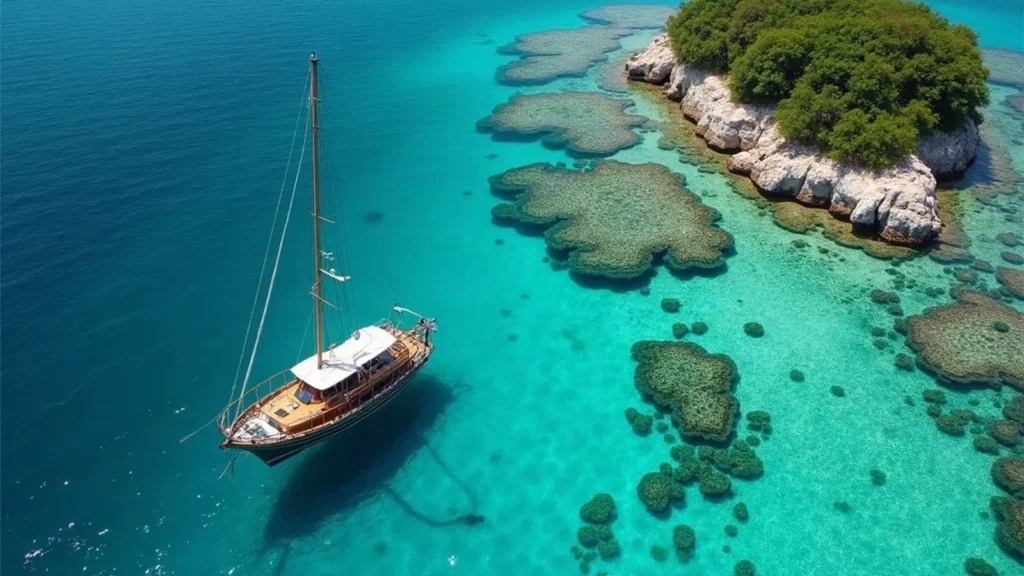
There is no clean answer to which hull material is greener, and anyone offering one is selling something. Timber, steel and composites each carry different burdens at different stages of a vessel’s life. This lays out the honest comparison so an owner can decide with the actual trade-offs in view.
Materials: the embodied burden
Steel production is energy intensive, and a steel hull represents a substantial embodied energy figure before it touches the water. Composite construction carries the burden of resin systems derived from petrochemicals plus the reinforcement, and it produces waste that is difficult to handle.
Timber’s embodied energy is comparatively low, and the material sequesters carbon while growing. That advantage is real but conditional: it depends entirely on the forest the timber came from. Slow-growing tropical hardwood from a poorly managed source is not a low-impact material, whatever the arithmetic on embodied energy says.
The legality and sourcing question
This is where timber’s case is won or lost. Documented, legally harvested timber from managed sources is a defensible choice. Undocumented hardwood from constrained species is not, regardless of how the vessel is subsequently operated.
SVLK certification verifies legality rather than ecological sustainability, so an owner who wants a genuinely defensible position has to ask beyond the certificate: which species, what is its conservation status, and where specifically did it come from. The answers are more complicated than a single document, which is exactly why they are worth asking for.
Operation dominates the lifetime picture
For almost any vessel operated commercially over a normal life, fuel burn dwarfs construction impacts. A heavy timber hull moving slowly can be efficient in fuel per guest night; a fast planing composite hull covering the same itinerary at speed will not be.
That means itinerary design, cruising speed and generator management do more for a vessel’s actual footprint than the hull material ever will. An operator serious about this should be looking at the operating profile first.
Repairability and lifespan
A timber hull in Indonesian waters is repairable with local materials and local skills more or less indefinitely, and hulls that are maintained genuinely last for decades. Longevity is an environmental argument: the vessel that does not need replacing is the low-impact one.
Composites are harder to repair well in remote areas and much harder to dispose of at end of life. Steel is highly recyclable, which is a real advantage that partly offsets its production burden.
| Stage | Timber | Steel | Composite |
|---|---|---|---|
| Material production | Low energy; depends entirely on forest source | High energy | Petrochemical-derived, moderate to high |
| Sourcing risk | High; legality and species status matter | Low | Low |
| Operation | Efficient at low speed, heavy | Heavy, efficient at displacement speed | Light, often operated fast |
| Repairability in region | Excellent | Good | Poor |
| End of life | Biodegradable, partly reusable | Highly recyclable | Difficult to dispose of |
What an operator can actually control
Very little about the material once the vessel is built, and a great deal about how it is run. Waste and sewage handling, single-use plastics on board, fuel and generator management, anchoring practice over coral, and the itinerary itself all sit within the operator’s control.
In the Indonesian liveaboard market, anchoring practice and waste handling arguably matter more to the environment the guests came to see than the hull material does.
How to make a claim you can defend
If you intend to market a vessel on environmental grounds, be specific and be prepared to evidence it. Document the timber source and species, state what waste and sewage systems are fitted, describe anchoring policy, and give real numbers on fuel where you have them.
Vague green language on a vessel built from undocumented hardwood is a reputational liability. A narrower, evidenced claim is worth more and survives contact with an informed guest.
The reef is the asset
For a liveaboard operating in Komodo, Raja Ampat or the Sulawesi grounds, the environmental argument is not abstract. The reef is the product. A degraded site is a vessel with nothing to sell and a route that has to change.
That makes environmental practice a commercial discipline rather than a marketing position. Mooring rather than anchoring where moorings exist, briefing guests properly, handling waste and sewage correctly, and limiting group sizes at fragile sites all protect the specific asset the business depends on. Operators who understand this tend to be around longest, which is the most persuasive argument available for doing it properly.
Frequently asked questions
Is a wooden boat more environmentally friendly than a steel one?
Not automatically. Timber has lower embodied energy and sequesters carbon, but only if it comes from a legally harvested and well-managed source; undocumented tropical hardwood undermines the entire case. Over a vessel’s operating life, fuel burn and waste handling usually matter more than the hull material either way.
Does SVLK certification make timber sustainable?
No. SVLK verifies legality of harvest and chain of custody under Indonesian law, which is a necessary floor rather than an ecological assessment. Owners who want a genuinely defensible sustainability position should ask about species conservation status and specific source in addition to the legality certificate.
What is the single biggest thing an operator can change?
Operating practice. Itinerary and cruising speed, generator management, waste and sewage handling, single-use plastics and anchoring policy are all within the operator’s control and typically outweigh construction-stage differences over the life of a commercial vessel.
Is a wooden hull automatically greener than a steel one?
Not automatically. Timber grown, harvested and documented legally stores carbon and takes far less process energy than steel plate, which is the wooden hull’s genuine advantage. That advantage evaporates if the timber’s origin is unverifiable. And on any powered vessel, lifetime fuel burn usually outweighs the build material footprint, so hull form, engine sizing and operating speed decide more than the material headline does.
What is the greenest choice an owner can actually control?
Four decisions, all contractual: specify documented legal timber; size engines for the hull’s realistic service speed instead of a brochure number; fit waste, grey-water and energy systems appropriate to the cruising area; and run the vessel at displacement speeds where fuel curves are kindest. These do more for the real footprint than any single material debate, and every one of them can be written into the build specification.
Talk to the Sulawesi Boat Builder desk
Send the vessel type, target length, intended operating area and your build or purchase window. We reply with the shortlist logic, the document set you will need, and the next verifiable step.
WhatsApp +6281139414563 · bd@juaraholding.com
Quotations, contracts and milestone schedules are issued in USD by PT Komodo Galangan Nusantara.