Custom Build Programme — Sulawesi
Matching the project to the right yard
- Hull types
- Traditional timber (phinisi) · fibreglass · light steel
- For
- Charter, liveaboard and private use
- Output
- Yard shortlist + technical brief + contract & escrow structure
The Island Build Registry — Sulawesi, Indonesia
One desk that maps where in Sulawesi a hull should be built, from which timber, and how the finished vessel reaches its working waters — with contracts, escrow and supervision handled at island level.
Matching the project to the right yard
Legal timber, not just cheap timber
A finished hull is not yet a delivered boat
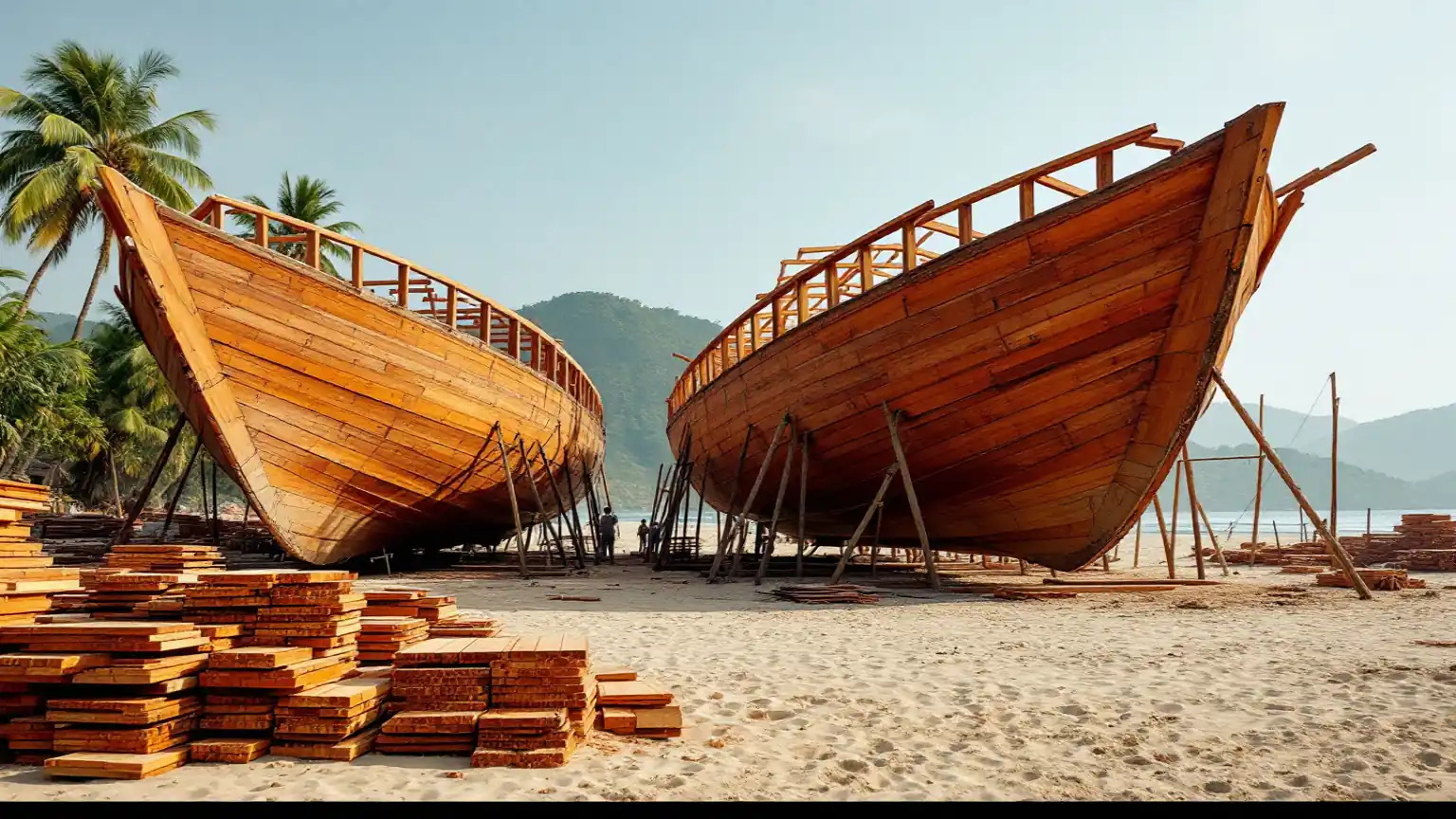
Every row below is drawn from the published hub guide — where each port fits in a build, refit or delivery plan.
| Hub | Role | Typical hulls & work | Go there for |
|---|---|---|---|
| Makassar (South) | Gateway port: customs, bunkering, chandlery, repair yards | Repairs and systems for all types; steel and mixed work | Staging, surveys, BKI access, project logistics |
| Kendari (Southeast) | Fishing-fleet building and repair cluster | Timber and FRP fishing hulls 10–30 GT, utility craft | Workboat builds and fishing-class surveys |
| Bitung (North) | Deep-water industrial port and fisheries base | Fibreglass production, steel, barges, tugs | Industrial slipways and year-round survey access |
| Mandar coast (West) | Traditional building and repair beaches, sheltered bays | Timber workboats and small traders | Traditional timber work on the central-west corridor |
The heritage villages of the far south — the phinisi coast — are documented in the island register & boatyard directory.
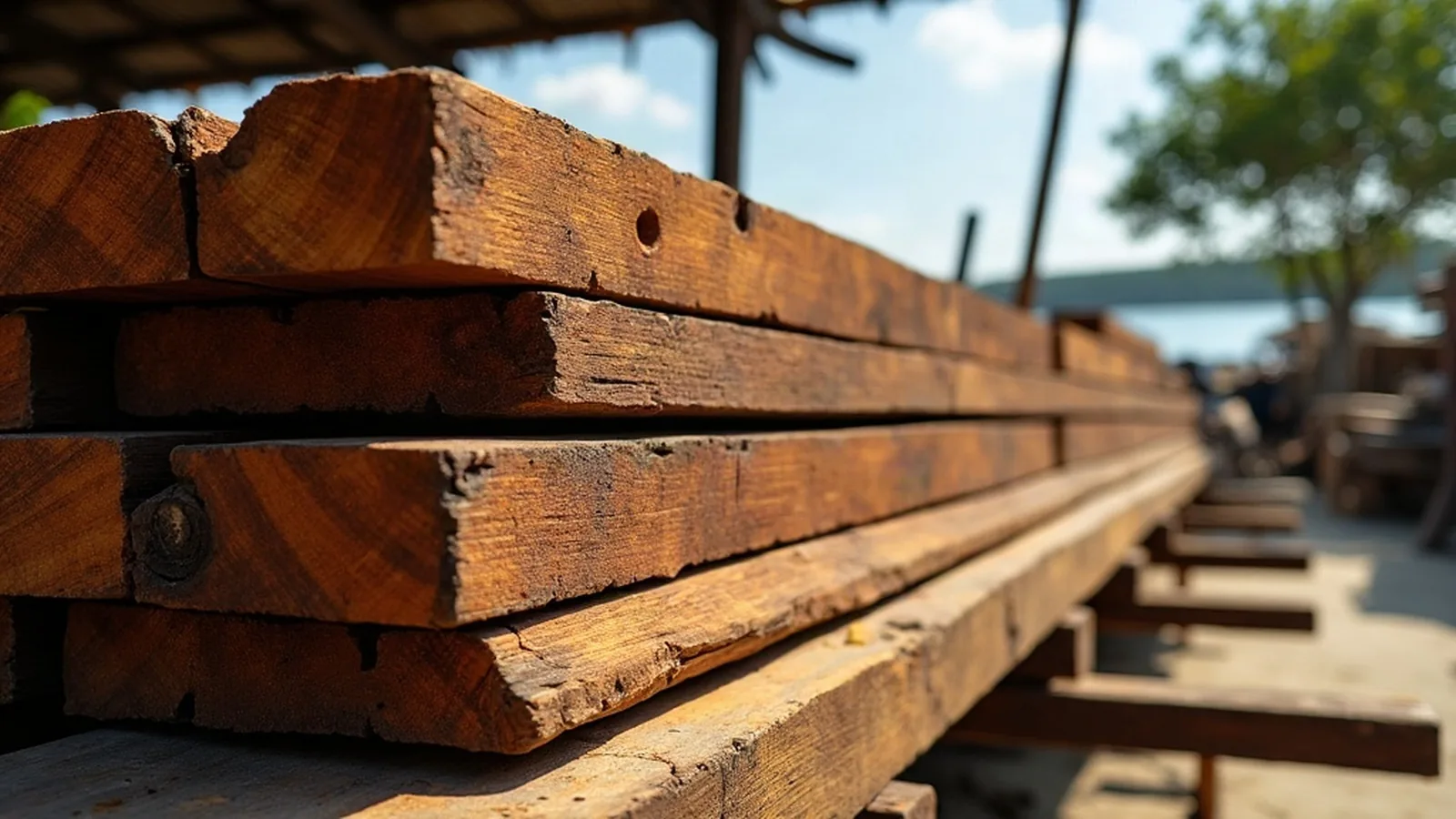
Species roles as published on the timber & materials desk. Every sourcing engagement verifies SVLK legality from log to hull.
| Species | Used for | Why | What to check |
|---|---|---|---|
| Ulin / ironwood | Keel, stem, sternpost, high-wear structure | Very dense, marine-borer resistant | SVLK papers; quoted per m³ on availability |
| Bitti | Frames, planking, keel in traditional practice | Proven structural timber of the heritage coast | Seasoning and moisture content before use |
| Teak / jati | Decks, deckhouse, interior joinery | Natural oils, dimensionally stable, weathers well | Plantation grade; clear vertical-grain deck stock |
Indicative passages from South Sulawesi, as published on the delivery routes desk. The Flores Sea rewards a May–October window.
| Destination | Distance (nm) | Typical days | Season window |
|---|---|---|---|
| Labuan Bajo / Komodo grounds | ±300–350 | 3–4 | Best May–Oct |
| Bali (Benoa / Serangan) | ±500–600 | 5–7 | Best May–Oct |
| Raja Ampat (Sorong) | ±900–1,100 | 10–14 | Transitional months |
Sulawesi Boat Builder is a specialist maritime brand under Juara Holding Group. Construction, repair, refit and vessel-sale engagements are contracted through PT Komodo Galangan Nusantara. Quotations in USD.
Phinisi-type hulls are overwhelmingly built on the South Sulawesi coast, in the shipbuilding communities of Bulukumba regency, whose Konjo-Bugis boatbuilding tradition was inscribed by UNESCO in 2017. Smaller numbers of timber hulls are also built in West and Southeast Sulawesi, but the phinisi heartland is South Sulawesi.
Keels and primary structure: ulin (ironwood) and bitti. Frames and planking: bitti, with teak or selected hardwoods for planking on higher-spec builds. Decks, deckhouse and joinery: teak. Meranti and similar secondary hardwoods appear only in non-critical parts.
Ask for the SVLK certificate itself, verify the issuing certification body and expiry date, and confirm the certificate holder matches the entity selling to you. Then check that transport documents accompanying each delivery state species, volume and origin consistent with the certificate. The desk performs this verification on every sourcing engagement.
Working bands in 2026: basic 20 m local-standard from roughly USD 150,000; mid-range 20–30 m charter USD 250,000–600,000; charter-grade 30 m USD 700,000–1.5M; luxury 30–40 m USD 1.8M–3M; 40 m+ flagship builds from USD 3M upward. Timelines run 12–30+ months.
Yes — the vessel is exported after build and registered under the chosen foreign flag. It then cannot conduct domestic commercial charter in Indonesia (cabotage reserves that for Indonesian-flagged vessels), but it can be used privately or operated commercially elsewhere. For domestic charter business, the route is Indonesian flag via a PT PMA.
BKI (Biro Klasifikasi Indonesia) is the standard choice — it is state-authorised for Indonesian-flagged vessels and has published rules for wooden hulls. Some export projects engage international societies for advisory or dual-standard builds, but for Indonesian-flagged charter vessels BKI is the operative classification society.
In sound charter condition: roughly USD 300,000–600,000 for boats 5–15 years old, and USD 500,000–900,000 for younger, recently refitted, in-survey vessels. Luxury-spec 30 m+ boats trade higher; project boats needing structural work trade far lower, priced off their refit budget.
The standard route runs south to Selayar, across the Flores Sea to the north coast of Flores or Sumbawa, then west along Nusa Tenggara to Bali — roughly 500–600 nm and 5–7 days with stops at Selayar and one or two sheltered anchorages en route.
More on the full owner FAQ.
Tell the desk what you want to build, source or move — the reply comes with the relevant page of the register, not a sales script.