Journal
Mapping Sulawesi’s Traditional Boat Types: Pinisi, Lambo, Sandeq and More
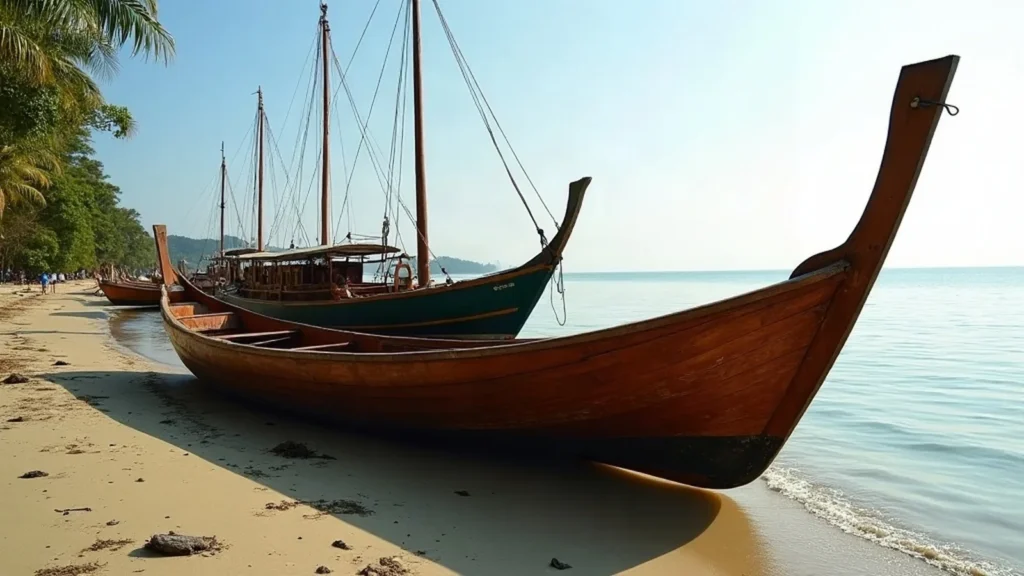
Sulawesi did not produce one traditional boat; it produced a family of them, each solving a different problem. Knowing the difference between a pinisi, a lambo and a sandeq is not antiquarian detail: it explains why different coasts build different hulls and what each tradition is actually good at.
Pinisi
The best known, and strictly a rig rather than a hull: a fore-and-aft schooner arrangement, typically two masts with multiple headsails, developed by South Sulawesi seafaring communities and carried on large locally built cargo hulls.
Modern usage applies the word to the whole vessel type, and today’s charter pinisi are motor vessels with traditional rigs on hulls considerably larger than their trading ancestors. They are built principally on the Bulukumba coast.
Padewakang
The older ancestor of the pinisi trade, a plank-built cargo vessel with a distinctive rig that carried Makassarese and Bugis trade across the archipelago and to Australia’s northern coast in earlier centuries.
Largely displaced by the pinisi rig, it matters historically because it establishes just how long this coast has been building ocean-going trading vessels rather than coastal craft.
Lambo
A smaller trading vessel type widely built and used across eastern Indonesia, with a rig showing clear influence from European vessel types encountered through trade.
The lambo is the workhorse end of the tradition: less spectacular than a pinisi, built in far greater numbers, and the type most likely to still be found doing genuine cargo work in eastern Indonesian waters.
Sandeq
The signature craft of the Mandar people of West Sulawesi: a slender, light outrigger sailing canoe built for speed, historically used for fishing and trading and now also raced.
The sandeq is an entirely different engineering philosophy from the pinisi. Where the pinisi is heavy, capacious and seakindly, the sandeq is light, narrow and fast. Both are Sulawesi traditions and neither informs the other much.
Working craft and the modern fleet
Alongside the named traditional types, Sulawesi coasts build a large volume of unglamorous working craft: fishing boats, small ferries, transport boats and dive tenders, increasingly in fibreglass in the north and in timber elsewhere.
This is the majority of what actually gets built on the island by number, and it is where the boatbuilding economy outside the charter sector lives.
| Type | Region | Character | Still built? |
|---|---|---|---|
| Pinisi | Bulukumba coast, South Sulawesi | Large timber schooner, now charter liveaboards | Yes, actively |
| Padewakang | South Sulawesi, historical | Earlier ocean-going trader | Rarely, mainly reconstruction |
| Lambo | Eastern Indonesia broadly | Smaller trading vessel | Yes |
| Sandeq | Mandar coast, West Sulawesi | Light fast sailing outrigger | Yes, including for racing |
| Working craft | Island-wide | Fishing, transport, dive tenders | Yes, in volume |
Why this matters when commissioning
The tradition a yard sits in shapes what it builds well. A Mandar yard building light fast outriggers is not the place to commission a heavy charter schooner, and the reverse is equally true.
It also matters for language. A conversation that uses the type names accurately gets to the right answer faster, and it signals to a yard that the client has done some homework, which is not a small advantage in a first meeting.
Reading a hull when you see one
A few visual markers let you place a vessel quickly. Look first at the stem and stern profile and at whether the hull carries the deep, capacious midsection of a cargo trader or the fine entry of a sailing craft built for speed. Then look at the rig: number of masts, whether the sails are set fore-and-aft, and how many headsails the vessel carries.
Finally, look at what has been added. Most working traditional vessels in eastern Indonesia today carry a wheelhouse, engine exhaust and a rig reduced to what is practically useful, and the relationship between the original form and those additions tells you a great deal about how the vessel has actually spent its working life.
None of this is academic when you are standing in a yard. Being able to say accurately what a hull is, and to ask about the specific tradition it comes from, changes the conversation with a shipwright from a sales pitch into a technical discussion. That shift is worth more in a first meeting than any amount of budget signalling.
Frequently asked questions
What is the difference between a pinisi and a lambo?
Scale and role, mainly. Pinisi refers to the large schooner rig carried on substantial cargo hulls from the Bulukumba coast, now the basis of the charter liveaboard fleet. Lambo is a smaller trading vessel type built and used widely across eastern Indonesia, with a rig showing European influence, and it remains the more common working vessel.
Is the sandeq related to the pinisi?
Only in the sense that both are Sulawesi traditions. The sandeq is a light, narrow, fast outrigger sailing canoe from the Mandar communities of West Sulawesi, built for speed under sail. The pinisi is a heavy, capacious cargo schooner from the south. They are different engineering philosophies serving different purposes.
Can I commission a traditional sailing vessel rather than a motor pinisi?
Yes, and some owners do, but be explicit about it from the start. Modern charter pinisi are motor vessels with traditional rigs, and a vessel intended to sail seriously needs different rig engineering, different underwater profile decisions and a naval architect involved from the beginning.
Apa beda utama phinisi, lambo, dan sandeq?
Phinisi adalah sebutan untuk kapal layar besar bertradisi schooner dari pesisir selatan Sulawesi, lahir sebagai kapal dagang dan kini banyak dibangun sebagai kapal wisata. Lambo adalah lambung kerja serbaguna yang lebih sederhana, dipakai untuk kargo dan perikanan antar pulau. Sandeq adalah perahu layar bercadik khas Mandar di Sulawesi Barat: ringan, cepat, dan dibangun untuk performa layar, bukan tonase.
Are all of these traditional types still being built today?
The phinisi-type hull is very much alive, sustained by the charter economy, and sandeq construction continues on the Mandar coast, kept visible by racing culture. Some historical types survive mainly through reconstruction and documentation projects rather than working orders. That mixed picture is normal for a living tradition: types persist where an economy supports them and become heritage projects where it no longer does.
Talk to the Sulawesi Boat Builder desk
Send the vessel type, target length, intended operating area and your build or purchase window. We reply with the shortlist logic, the document set you will need, and the next verifiable step.
WhatsApp +6281139414563 · bd@juaraholding.com
Quotations, contracts and milestone schedules are issued in USD by PT Komodo Galangan Nusantara.