Journal
Converting a Cargo Phinisi Into a Safe, Comfortable Liveaboard
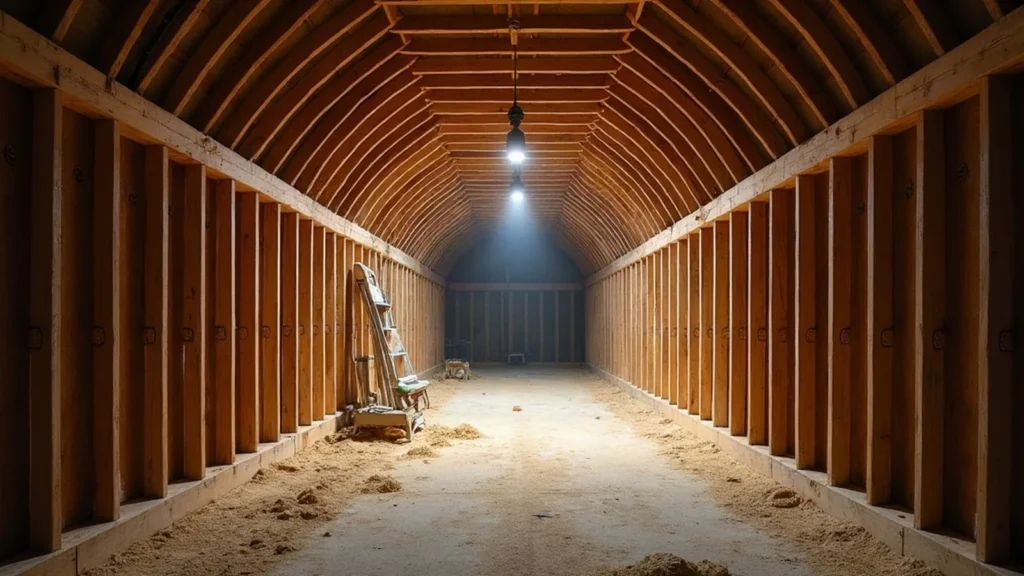
A conversion is a build project wearing a purchase price. Turning a working cargo hull into a passenger vessel changes its stability picture, its fire and escape arrangements, its tankage and its regulatory category. Those are engineering questions, and they come before any conversation about cabins.
Why conversions are attractive
A sound cargo hull can be bought for a fraction of a newbuild, and the hulls in question are often genuinely well built, with heavy scantlings and hardwood structure that has already proved itself in service.
The appeal is real. The trap is that the hull is the part of a liveaboard that costs least to build, so acquiring it at low cost saves less of the total project than it appears to.
Stability comes first
A cargo hull was designed to carry weight low. A passenger conversion adds superstructure, cabins, tankage and free surfaces high, and removes the ballasting effect of cargo. That combination changes the stability picture fundamentally.
Any conversion intended to carry paying guests should begin with a stability assessment by a naval architect working from an actual survey of the hull, not from assumptions. If the numbers do not work, that is worth knowing before a deck plan exists.
Fire, escape and the arrangement
Passenger vessels need escape routes from accommodation spaces, fire boundaries between accommodation and machinery, detection, and appropriate extinguishing arrangements. A cargo hold converted into a cabin corridor rarely satisfies these by accident.
Design the arrangement around escape and fire boundaries first and fit the guest experience inside that envelope. Doing it the other way round produces a beautiful layout that a verifier will require you to rebuild.
The systems the hull never had
A cargo vessel carries minimal systems. A liveaboard needs generation and distribution, fresh water production and storage, sewage treatment and holding, refrigeration, air conditioning, and a bilge and fire system sized for accommodation spaces.
This is where conversion budgets are actually spent. The systems package on a passenger conversion is close to what it would be on a newbuild, because the requirements are driven by the service, not by the hull’s history.
- Electrical generation, distribution and storage sized for guest load
- Fresh water production, storage and pressurised distribution
- Sewage treatment and holding appropriate to the operating area
- Refrigeration and provisioning capacity for the itinerary
- Air conditioning, which drives generator sizing more than anything else
- Bilge, fire detection and extinguishing systems for accommodation spaces
- Navigation, communication and safety equipment to the applicable standard
Structural work on an old hull
Expect discovery. Opening a working hull to install accommodation reveals the condition of structure that was never visible, and on a vessel that has worked hard for decades some of it will need replacing.
Budget a contingency proportionate to the hull’s age and unknown history, and run a written change-order procedure so that discovery is a priced decision rather than an open account.
Deciding whether to convert or build
Compare properly. Purchase price plus survey plus structural remediation plus the full systems and interior package plus certification, against a newbuild quotation for the same finished specification.
Conversions win when the hull is genuinely sound, the arrangement suits passenger use without fighting the structure, and the owner has the appetite for discovery. They lose when any of those three is missing, and they lose expensively.
Timeline reality on a conversion
Conversions run longer than owners plan, and the reason is structural rather than managerial. A newbuild proceeds through a known sequence; a conversion proceeds through a sequence repeatedly interrupted by discovery, and each discovery requires a decision, a price and sometimes a design change.
Plan the programme with genuine float and with a defined decision turnaround on the owner’s side, because the yard cannot progress while waiting for an answer and idle yard time is still time. Owners who can decide quickly, on the basis of a pre-agreed contingency, complete conversions in something close to the planned window. Owners who cannot will watch a six-month programme become a twelve-month one without any single dramatic failure.
Frequently asked questions
How can I convert a used cargo phinisi into a passenger liveaboard?
Start with the certification target and a stability assessment by a naval architect working from a survey of the actual hull. Then design the arrangement around escape routes and fire boundaries, and fit the guest layout inside that envelope. Only after the technical envelope is fixed should cabins, interiors and systems be specified and the structural scope priced.
Does converting cost less than building new?
Sometimes, but less often than the purchase price suggests. The hull is the least costly part of a liveaboard to build, so acquiring one at low cost saves a smaller share of the project than expected, while systems, interior and certification cost much the same either way. Compare fully loaded totals rather than purchase price against build quotation.
What is the biggest risk in a conversion?
Discovering after purchase that the stability picture does not support the intended passenger arrangement, or that the structure requires far more replacement than expected. Both are addressed by commissioning a survey and a stability assessment before the purchase completes rather than after, which is the single highest-return step in a conversion project.
How much of a cargo hull typically survives conversion?
The structural core: keel, frames and planking, where the survey confirms they are sound, plus the basic hull form that gives the vessel its character. Almost everything else changes, because deck layout, accommodation, machinery, tankage, electrics and safety systems built for cargo service do not meet passenger requirements. The economic case for conversion rests on that surviving structure being genuinely good, which is what the pre-purchase survey must establish.
Does a converted vessel need to be re-certified?
Yes. Changing service from cargo to carrying passengers is a regulatory event, not a cosmetic one. The vessel enters the passenger requirements of the applicable Indonesian framework, which brings stability documentation, fire protection, life-saving appliances, crewing and survey obligations sized for the new role. Engage the certification question before design decisions are frozen, because compliance drawn in at the start is dramatically cheaper than compliance forced in at the end.
Talk to the Sulawesi Boat Builder desk
Send the vessel type, target length, intended operating area and your build or purchase window. We reply with the shortlist logic, the document set you will need, and the next verifiable step.
WhatsApp +6281139414563 · bd@juaraholding.com
Quotations, contracts and milestone schedules are issued in USD by PT Komodo Galangan Nusantara.