Journal
Sulawesi’s Pinisi Heritage: From Cargo Traders to Liveaboards
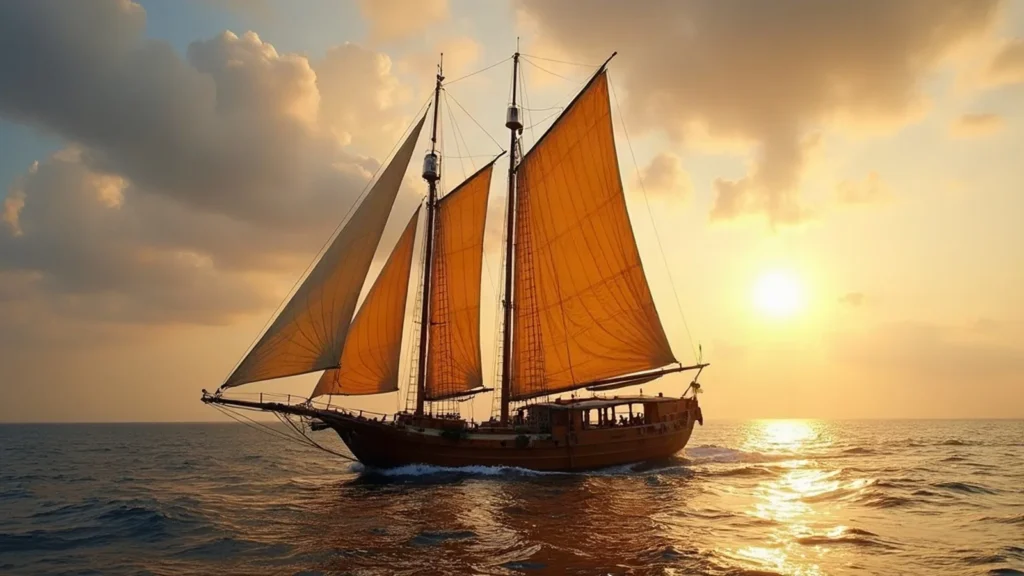
The pinisi survived because it kept working. Unlike most traditional sailing rigs, it was never displaced into museums; it carried cargo through the twentieth century, took engines, and then found a second commercial life as the platform of Indonesia’s liveaboard charter industry. That continuity is why the skill base still exists.
What a pinisi actually is
Strictly, pinisi refers to a rig rather than a hull: a distinctive fore-and-aft schooner rig, typically two masts with multiple headsails, developed by seafaring communities of South Sulawesi and carried on locally built hulls.
In common use, and in the charter market, the word now describes the whole vessel type. That drift is worth knowing, because it is why a modern motor-dominant charter vessel with token sails is still called a pinisi by everyone involved.
The trading centuries
Bugis, Makassarese, Konjo and Mandar seafarers from South and West Sulawesi built and sailed these vessels across the archipelago and beyond, carrying timber, spices and general cargo on routes that reached Australia’s northern coast.
That trading role is the reason the tradition is alive. Boatbuilding on this coast was never a revival; it was continuous industrial activity serving a real transport economy, and the apprenticeship chain that transmits the craft was never broken.
UNESCO recognition and what it does and does not mean
In 2017 UNESCO inscribed the art of boatbuilding in South Sulawesi on its Representative List of the Intangible Cultural Heritage of Humanity. The inscription recognises the knowledge, skills and rituals of the shipwright communities.
It is important to be precise about what that means. It is cultural recognition of a living tradition, not a technical certification, and it says nothing about the engineering standard of any particular yard or vessel. Owners occasionally encounter it deployed as a quality claim, and it is not one.
The shipwrights
Master shipwrights in this tradition are known as panrita lopi. The knowledge is transmitted by working alongside rather than by drawing, and the hull form comes from judgement developed over years rather than from a lofted frame set.
That is genuinely remarkable, and it is also the reason a naval architect becomes necessary as soon as a vessel has to satisfy a rule set. The two facts sit together without contradiction: extraordinary craft skill, and a documentation culture that developed for a different purpose.
The engine and the second life
Motorisation through the twentieth century changed the vessels substantially. Hulls grew, rigs shrank in working importance, and the sailing pinisi became, in practice, a motor vessel with a traditional rig.
Then tourism arrived. The same hull form, fitted out with cabins and running dive and cruise itineraries in Komodo and Raja Ampat, turned out to be an extraordinarily marketable product. The charter industry is now the main commercial driver of large timber boatbuilding in Sulawesi.
What preservation actually requires
Traditions survive by being economically viable, not by being admired. The pinisi tradition is alive because building these vessels still pays, and the threats to it are commercial: timber supply, competition from steel and fibreglass, and the risk that younger people find better work elsewhere.
The most useful thing an owner can do for the tradition is commission well: specify properly, pay fairly, insist on documentation, and treat the yard as a professional counterparty. That strengthens the part of the sector that has a future.
Heritage claims and honest marketing
The heritage story is a genuine commercial asset for a charter vessel, and it is also easy to overstate. Vessels are advertised as built by methods unchanged for centuries when power tools and modern fastenings are plainly in use, or as UNESCO-recognised when the recognition applies to the craft tradition and not to any particular boat.
The accurate version is more interesting than the inflated one. A hull shaped by shipwrights working in a continuous tradition, using judgement rather than drawings, built on an open beach, with modern systems installed to a specified standard, is a genuinely remarkable object. Describe that and it survives any guest’s curiosity. Describe something else and it does not.
Frequently asked questions
Is pinisi a boat type or a rig?
Strictly it is a rig, a distinctive fore-and-aft schooner arrangement developed by South Sulawesi seafaring communities and carried on locally built hulls. In common and commercial use the word now describes the whole vessel type, which is why modern motor-dominant charter vessels are still called pinisi.
What did UNESCO actually recognise?
UNESCO inscribed the art of boatbuilding in South Sulawesi on the Representative List of the Intangible Cultural Heritage of Humanity in 2017, recognising the knowledge, skills and practices of the shipwright communities. It is cultural recognition of a living tradition, not a technical or quality certification of any yard or vessel.
Are pinisi still built by hand?
Largely yes, on open beaches with hand and power tools but without the covered halls, lifting equipment or lofting floors of an industrial yard. Modern machinery has entered the process for cutting and fastening, but the shaping of the hull remains a matter of the shipwright’s judgement rather than of a drawn frame set.
What exactly did UNESCO inscribe in 2017?
The inscription covers the art of boatbuilding in South Sulawesi, the pinisi shipbuilding tradition, on the Representative List of the Intangible Cultural Heritage of Humanity. It recognises the knowledge system of the shipwright communities: the skills, rituals and social organisation of the craft. It is not a vessel registry and it does not certify individual boats, which is worth remembering when marketing language drifts toward implying otherwise.
Does heritage status restrict commercial boatbuilding?
No. The inscription carries recognition and a safeguarding intent rather than commercial restriction, and commissioned builds are one of the main reasons the tradition remains economically alive rather than becoming a museum practice. What responsible owners can do is engage the craft on fair terms: contract clearly, pay milestones on time, and let the build support the shipwright families whose knowledge the listing celebrates.
Talk to the Sulawesi Boat Builder desk
Send the vessel type, target length, intended operating area and your build or purchase window. We reply with the shortlist logic, the document set you will need, and the next verifiable step.
WhatsApp +6281139414563 · bd@juaraholding.com
Quotations, contracts and milestone schedules are issued in USD by PT Komodo Galangan Nusantara.