Journal
Phinisi vs Turkish Wooden Yachts: Build Quality and Experience
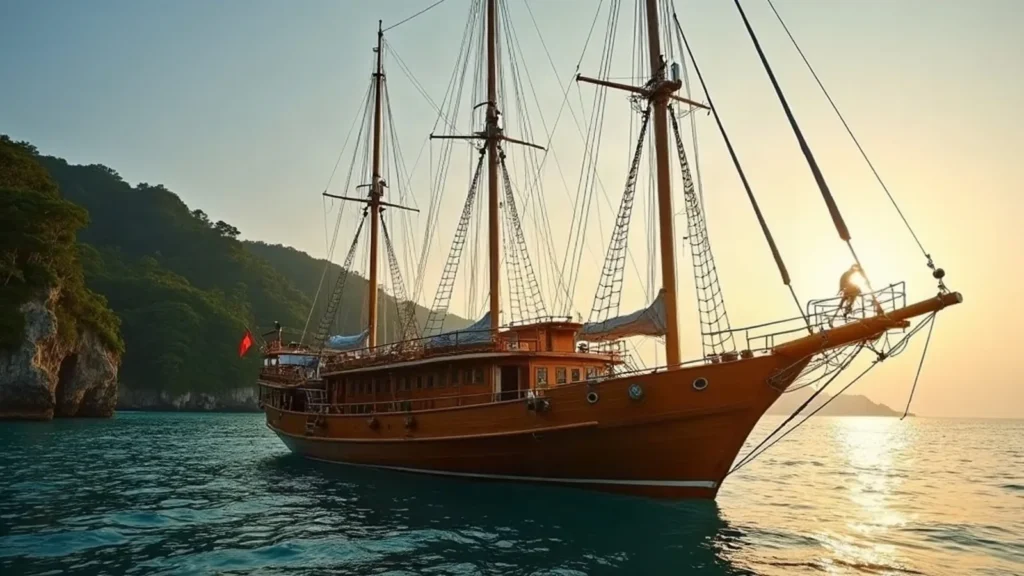
The two great living traditions of large wooden yacht building are in south-west Turkey and south Sulawesi. They produce different vessels for different reasons, and the honest comparison is about method and regulatory environment rather than about which is better. This is the comparison an owner deciding between them actually needs.
Two traditions, two methods
Turkish wooden yacht building, centred historically on Bodrum and the surrounding coast, evolved into a yard-based industry building gulets and larger wooden motorsailers, typically frame-first and increasingly to naval architecture drawings, in covered or semi-covered facilities.
Sulawesi’s tradition builds plank-first on open beaches, with the shell shaped and fastened before internal framing, and hull form derived from the shipwright’s judgement rather than from a lofted frame set. Both produce strong, long-lived hulls; they arrive there by opposite routes.
The regulatory environment is the biggest difference
Turkey’s proximity to European markets and its charter industry’s exposure to European clients pushed its yards toward formal certification, naval architecture and documented construction earlier and harder than Indonesia’s did.
That has a direct consequence for a buyer. A Turkish-built vessel is more likely to arrive with a documented structural history as a matter of course. On a Sulawesi build the same documentation is entirely achievable, but it happens because the owner specified and supervised it, not because the market demanded it by default.
Cost structure
Sulawesi is generally more economical on labour and on tropical hardwood, and it is those two inputs that dominate the hull cost of a large timber vessel. That advantage narrows sharply once imported machinery, systems and yacht-standard finishing enter the picture, because those are priced globally.
The practical implication is that the Sulawesi cost advantage is largest on the hull and smallest on the interior and systems. An owner specifying a European-standard interior on a Sulawesi hull captures much less of the differential than one specifying a well-built, well-finished but regionally appropriate vessel.
The vessels themselves
| Aspect | Sulawesi phinisi tradition | Turkish wooden yacht tradition |
|---|---|---|
| Construction sequence | Plank-first, frames fitted after | Generally frame-first |
| Design basis | Shipwright judgement, drawings where specified | Increasingly naval architecture as standard |
| Facility | Open beach, no lifting equipment | Yard-based, often covered |
| Typical timber | Ulin, bitti, teak | Iroko, mahogany, pine, teak |
| Regulatory default | Local practice unless specified otherwise | Certification more often assumed |
| Where the cost advantage sits | Hull labour and hardwood | Systems integration and finishing standards |
What each does best
The Sulawesi tradition builds large, heavy, seakindly timber hulls with an aesthetic that is genuinely distinctive, at a hull cost that is difficult to match anywhere. In the Indonesian charter market, a well-built pinisi is also the vessel guests are actually looking for, which is a commercial fact rather than a sentimental one.
The Turkish tradition delivers a more predictable process, more documentation by default, and easier integration with European standards, insurers and markets. For a vessel intended to operate in the Mediterranean, that alignment is worth a great deal.
How to decide
Ask where the vessel will work and who will insure and certify it. A vessel for Indonesian waters, Indonesian charter guests and an Indonesian regulatory environment has an obvious answer. A vessel for Mediterranean operation has a different obvious answer.
The mistake is choosing on the hull cost alone and then discovering that the certification, insurance and market alignment of the finished vessel do not match where you intend to use it.
Resale, and where each vessel is worth most
A vessel is worth most in the market that understands it. A well-documented pinisi with current Indonesian certification and an operating history in Komodo or Raja Ampat has a real buyer pool in Indonesia, where charter operators are actively looking for proven hulls.
The same vessel offered in the Mediterranean is a curiosity with an unfamiliar certification history, and prices accordingly. The reverse applies to a Turkish gulet offered in Indonesia. That asymmetry is worth factoring into the original decision, because the exit is part of the investment: building in the region where the vessel will eventually be sold is usually worth more than the difference in build cost.
Frequently asked questions
How does phinisi build quality compare to Turkish wooden yacht builders?
Both traditions can produce excellent hulls, and both can produce poor ones. The systematic difference is regulatory environment rather than craftsmanship: Turkish yards more often build to naval architecture and formal certification by default, while a Sulawesi build reaches the same standard when the owner specifies and supervises it. Craftsmanship in the Sulawesi timber tradition is genuinely world class.
Does a phinisi cost less to build than a gulet?
On hull cost, generally yes, because labour and tropical hardwood are more economical in Sulawesi. The advantage narrows substantially once imported machinery, systems and yacht-standard finishing are included, since those are priced on global markets. Compare like-for-like specifications rather than headline hull prices.
Can a Sulawesi-built vessel operate in the Mediterranean?
It can, but the path involves export, foreign flag registration and satisfying the certification and insurance expectations of that market, which is easier to plan for from the specification stage than to retrofit. If Mediterranean operation is the goal, that decision belongs at the beginning of the project rather than after launch.
Is a phinisi cheaper to build than a Turkish gulet?
Labour and locally sourced timber generally cost less in Sulawesi than on the Bodrum coast, so the hull stage usually favours the phinisi. The gap narrows once imported machinery, systems and high-grade interior finishing enter, because those cost broadly the same worldwide. Compare completed boats against the same outcome specification in USD rather than headline quotes, and the honest answer is: often cheaper, rarely as much cheaper as the first quote suggests.
Which holds its value better over time?
Documentation beats origin. A vessel of either tradition with title papers in order, survey history, class or statutory certificates and a maintenance log resells credibly; a vessel without them discounts steeply no matter where it was built. If resale matters to you, the money spent on supervision, records and periodic survey is worth more than any premium on the build itself.
Talk to the Sulawesi Boat Builder desk
Send the vessel type, target length, intended operating area and your build or purchase window. We reply with the shortlist logic, the document set you will need, and the next verifiable step.
WhatsApp +6281139414563 · bd@juaraholding.com
Quotations, contracts and milestone schedules are issued in USD by PT Komodo Galangan Nusantara.