Journal
Managing Risk When Building a Boat in Indonesia as a Foreigner
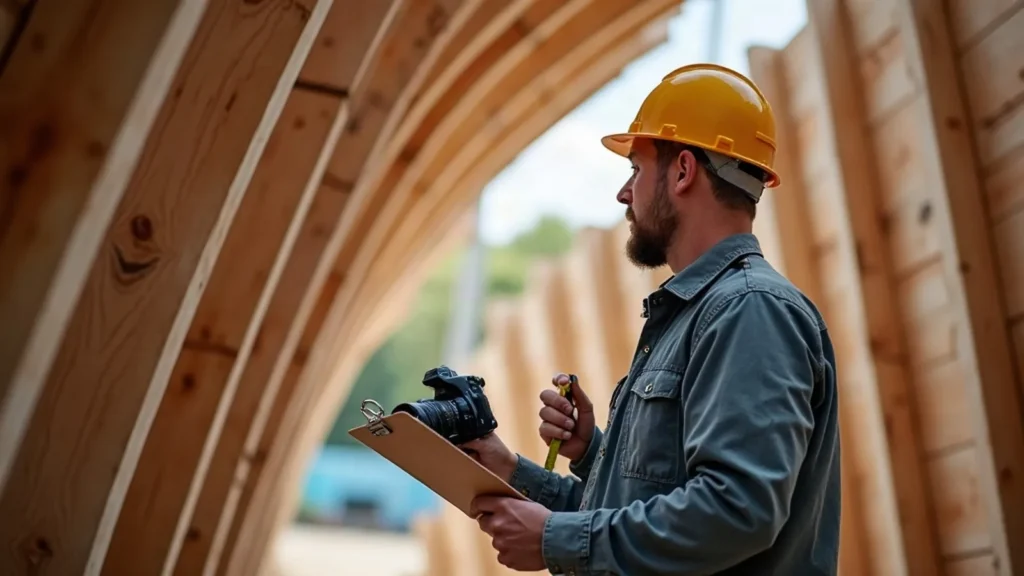
The risks on an Indonesian build are rarely the ones foreign owners arrive worrying about. Outright fraud is uncommon; specification drift, payment exposure, undocumented material and late certification discovery are what actually damage projects. Each has a control that works, and none of them is expensive relative to the exposure.
Risk one: paying ahead of progress
The most common structural weakness in an owner’s position is a payment schedule that runs ahead of physical work. Money paid for a stage not yet built is money whose return depends entirely on goodwill.
The control is a milestone schedule where each stage is a physically inspectable condition and inspection sign-off precedes the payment. Combined with retention held against snag completion, this keeps the owner’s exposure roughly aligned with the value actually delivered at every point in the project.
Risk two: specification drift
Every ambiguity in a specification is resolved during the build by whoever is standing there. That is not dishonesty; it is the practical necessity of keeping work moving. But the accumulation of dozens of small decisions made without the owner produces a vessel that is subtly not the one specified.
The control is a specification detailed enough that most decisions are already made, plus a written variation procedure with an owner response time short enough that asking is faster than guessing.
Risk three: undocumented material
Timber without legality documentation is a latent problem that surfaces at export, at classification, or at resale. It is also a signal that the supply chain is informal and therefore unpredictable.
The control is a legality warranty in the contract, a right of rejection at the yard’s cost, and verification at milestone inspection rather than by correspondence.
Risk four: late certification discovery
The most expensive risk on the list. An owner who builds first and asks about commercial passenger certification afterwards can find that structure, escape arrangements, stability or ownership structure do not support it, and the remedy is rework.
The control is deciding the certification target before design, and confirming the applicable requirements with the relevant authority or class society rather than relying on what the yard believes to be true.
Risk five: contracting with the wrong party
On a coast where many yards are family operations, the question of who exactly you are contracting with is not trivial. Verify the legal entity, who has authority to sign, and what assets stand behind the obligations.
This matters less for enforcement, which is slow and expensive anywhere, and more for clarity. An owner who knows exactly who the counterparty is will structure payments and retention appropriately; an owner who does not will discover the answer at the worst moment.
The controls, in priority order
- Written specification and material schedule as contract annexes
- Milestone payments with inspection sign-off preceding each release
- Independent supervision with the authority to withhold sign-off
- Retention held against snag list completion
- Owner-purchased major equipment rather than yard-funded procurement
- Legality warranty with a right of rejection at the yard’s cost
- Certification target settled before design
- Contingency held by the owner, not committed at signature
Where legal advice belongs
Ownership structure, flag, tax treatment and company formation are Indonesian legal and tax questions and belong with qualified Indonesian counsel. This is not a disclaimer for its own sake: the consequences of getting the structure wrong include a vessel that cannot legally earn.
What a technical desk contributes is making sure the vessel specification, certification path and delivery plan are consistent with whichever structure counsel recommends, so the two halves of the project point the same way.
Recovering a project that has already gone wrong
Owners often arrive at this desk with a build already in trouble: payments ahead of progress, a specification nobody can locate, and a relationship that has become adversarial.
Recovery starts with evidence, not with confrontation. Commission an independent condition and progress survey to establish what has physically been built, reconcile it against whatever contractual documentation exists, and quantify the gap in scope and in money. Only then is there a basis for a conversation. Projects are more often recoverable than owners fear, because the yard usually also wants the vessel finished, but recovery requires a documented position rather than a strongly held impression.
Frequently asked questions
What are the main risks of building a wooden yacht in Indonesia as a foreign owner?
Payment running ahead of physical progress, specification drift from accumulated small decisions made without the owner, undocumented timber that surfaces at export or classification, and late discovery of certification requirements that force rework. Each is controllable through milestone structure, specification detail, legality warranties and settling the certification target before design.
Is fraud common in Indonesian boatbuilding?
Outright fraud is not the typical failure mode. Far more projects are damaged by ambiguity, informal supply chains and decisions made in the owner’s absence than by dishonesty. That is encouraging, because ambiguity is solvable with documents and supervision in a way that fraud is not.
Do I need a lawyer for a build contract?
For anything of significant value, yes, and Indonesian counsel rather than only home-jurisdiction counsel. Ownership structure, flag and licensing decisions in particular have consequences that a foreign lawyer will not reliably anticipate, and those decisions shape the build specification itself.
What is the single biggest risk for a foreign owner building in Indonesia?
Paying ahead of verifiable progress. Most losses we hear about reduce to money released faster than inspectable work accumulated, leaving the owner with no leverage when the schedule slipped. The remedy is structural, not personal trust: milestone payments tied to stages a third party can inspect, photographs and reports on a fixed cadence, and a named counterparty under a written contract with a dispute clause.
Do I need an Indonesian company to build a boat here?
Commissioning a build does not by itself require one; foreigners contract builds through Indonesian counterparties routinely. Operating the vessel commercially in Indonesian waters is a different question, involving flag, licensing and corporate structure decisions that deserve proper legal advice. Separate the two early: build under a clean contract now, and structure ownership and operation deliberately before the boat launches, not after.
Talk to the Sulawesi Boat Builder desk
Send the vessel type, target length, intended operating area and your build or purchase window. We reply with the shortlist logic, the document set you will need, and the next verifiable step.
WhatsApp +6281139414563 · bd@juaraholding.com
Quotations, contracts and milestone schedules are issued in USD by PT Komodo Galangan Nusantara.