Journal
Best Woods for Phinisi Keels, Frames, Planking and Decks
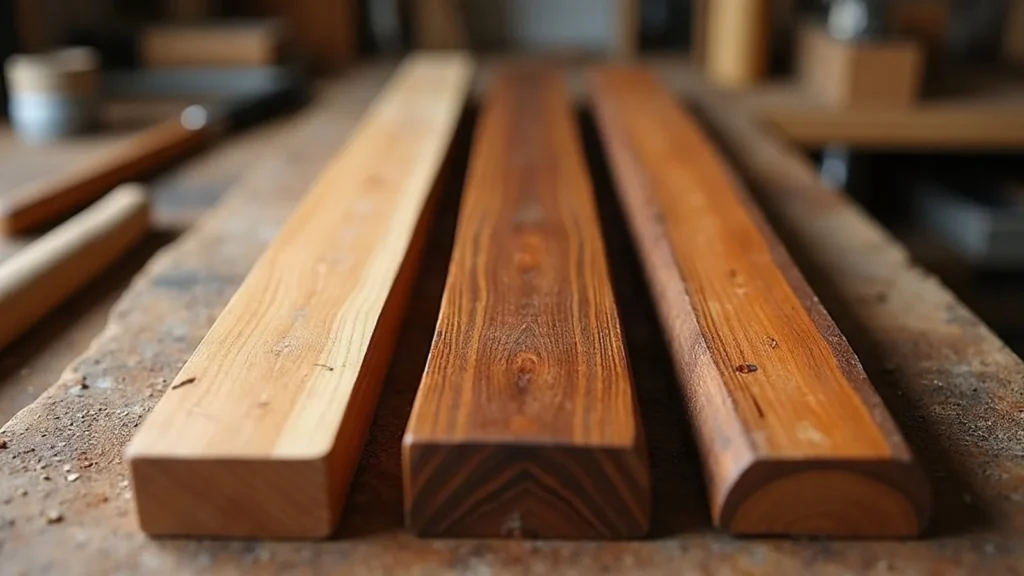
A pinisi hull is not built from one timber but from a considered set of them, matched to the job each element does. Density and seawater durability go into the backbone, strength and workability into frames and planking, and stability and comfort into the deck. Getting this allocation right is more important than getting a single premium species everywhere.
Ulin: the backbone timber
Ulin, known locally as kayu besi or ironwood, is Eusideroxylon zwageri, and it is the traditional choice for keels, stems, sternposts and other major structural members. Its density and resistance to marine degradation are exceptional, and hulls built with an ulin backbone routinely outlast the systems installed in them.
Those same properties make it difficult. It is heavy, hard on tools, and slow to work. It is also a constrained resource, which means availability and legality documentation are genuine project variables rather than administrative details.
Bitti: the working timber of the hull
Bitti, Vitex cofassus, is the species that does most of the work in a Sulawesi hull. It is used widely for frames and planking, because it combines good strength with dimensional stability, works reasonably under hand tools, and holds fastenings well.
Where an owner has a limited premium-timber budget, concentrating it on the backbone and using good quality, properly seasoned bitti for frames and planking is generally a better hull than spreading the budget thinly across everything.
Teak and deck timbers
Teak, jati, is the conventional deck and joinery timber for good reason: dimensional stability, natural oils that resist rot, and a surface that stays comfortable underfoot in tropical sun.
It is also expensive and increasingly the subject of provenance questions. Deck specification is one of the places where an owner should decide explicitly between genuine teak, a documented alternative hardwood, and a synthetic decking system, rather than leaving it to be resolved at the yard by whatever arrives.
Matching species to structural role
| Element | Usual species | Why | What goes wrong if substituted badly |
|---|---|---|---|
| Keel, stem, sternpost | Ulin | Density, seawater durability, longevity | Degradation at the most expensive place to repair |
| Frames | Bitti | Strength with workability, holds fastenings | Fastening loosening, hull movement |
| Planking | Bitti and comparable hardwoods | Stability, workability, seam behaviour | Shrinkage, opened seams, persistent leaks |
| Deck | Teak or documented alternative | Stability, comfort, rot resistance | Cupping, leaks into the accommodation below |
| Joinery and interior | Teak and mixed hardwoods | Appearance and stability | Movement, gaps, warranty argument |
Seasoning is as important as species
A well-chosen species that is still wet will behave worse than a modest species that is properly seasoned. Structural timber for tropical wooden boatbuilding is normally worked down to roughly the mid-teens to around twenty percent moisture content before major structural work, with the exact target depending on species and section thickness.
Specify a target, take readings at inspection, and record them. Moisture readings are one of the few genuinely objective measurements available on a beach-built hull, and they are the number most likely to predict how the vessel behaves in its first two years.
How to write the specification
Name the species per structural element in a material schedule attached to the contract. State the moisture target. List the pre-approved alternates for each element and require written approval for anything outside that list, with legality documentation for the substitute.
This turns a supply problem into a fast decision rather than a silent one. It is also the document your surveyor inspects against, which is what makes milestone sign-off meaningful rather than ceremonial.
How timber choice shows up ten years later
The consequences of species and seasoning decisions are not visible at handover. They appear in the third to tenth year, as the pattern of what the vessel needs at each yard period.
A hull with a sound ironwood backbone and properly seasoned frames tends to need cosmetic and systems attention while the structure stays quiet. A hull built in a hurry from wet timber develops a recurring pattern of seam work, refastening and localised replacement that never quite resolves, because the underlying movement was designed in. When an experienced buyer looks at a used vessel, what they are reading in the survey report is essentially the quality of these decisions, made by somebody else, years earlier.
Frequently asked questions
Which timber species are most suitable for phinisi keels, frames, planking and decks?
Ulin (kayu besi) for keels and major structure because of its density and seawater durability, bitti (Vitex cofassus) for frames and planking because it balances strength and workability, and teak or a documented alternative for decks and joinery. Selection in practice depends on availability, budget and the SVLK legality status of each species at the time of construction.
Is ulin always necessary?
Not always, but it is the traditional choice for the backbone for good reason, and substituting it is a decision with long consequences at the most expensive place on the hull to repair. If ulin is unavailable, agree the alternate and its documentation before construction rather than accepting a substitution made at the yard.
Can I use imported timber?
It is possible but rarely economic, and it introduces its own documentation requirements on import. The stronger play is usually to specify well-documented local species with a clear alternate list and to spend the budget difference on seasoning discipline and supervision instead.
Can a single timber species be used for the whole boat?
No, and the tradition never worked that way. Keels and floors want the densest, most durable classes, frames want strength with workable grain, planking wants a species that holds fastenings and takes caulking, and decks want dimensional stability underfoot in sun and rain. Mixing species by structural role is not a compromise; it is the design, and a yard proposing one species throughout is signalling a supply problem.
How long should hull timber season before it is used?
Thick hardwood sections need months of air seasoning, and the heavy keel and frame stock often arrives partially seasoned and continues drying in place. What matters is checking moisture content before planking and finishing, because building with green timber locks shrinkage and movement into the structure. Ask the yard how stock is stored, how long it has been down, and how moisture is checked.
Talk to the Sulawesi Boat Builder desk
Send the vessel type, target length, intended operating area and your build or purchase window. We reply with the shortlist logic, the document set you will need, and the next verifiable step.
WhatsApp +6281139414563 · bd@juaraholding.com
Quotations, contracts and milestone schedules are issued in USD by PT Komodo Galangan Nusantara.