Journal
Legal Boatbuilding Timber in Sulawesi: SVLK, Species and Sources
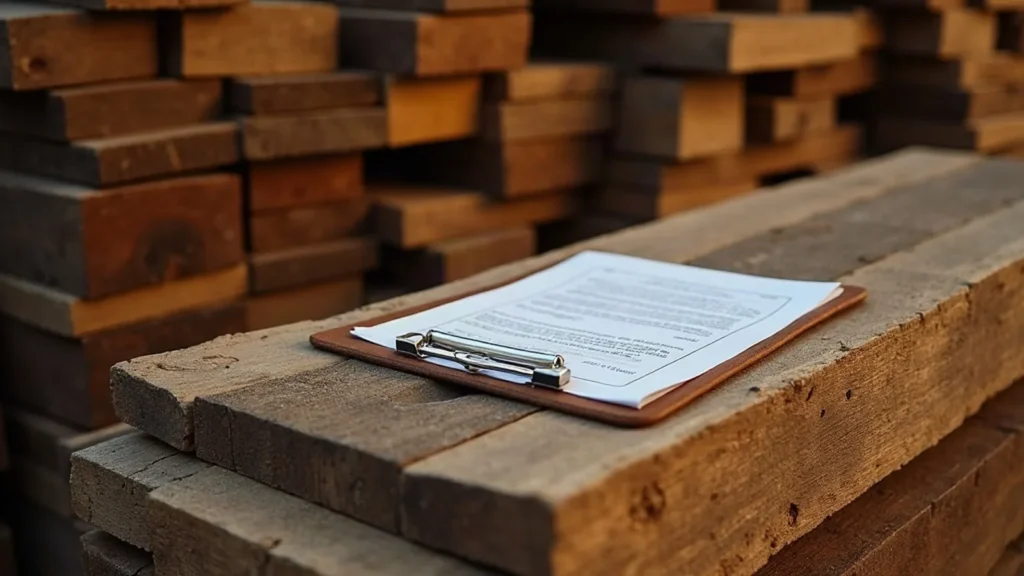
Timber legality is not a compliance formality in an Indonesian boat project; it is a delivery risk and an export risk. Indonesia’s SVLK system governs timber legality, and a build that cannot document its structural hardwood is a build that will meet friction at export, at classification, and increasingly at insurance.
What SVLK is
SVLK, the Sistem Verifikasi Legalitas Kayu, is Indonesia’s timber legality assurance system. It certifies operators through the supply chain, from forest management through processing, and it underpins the V-Legal documentation that accompanies timber product exports.
It exists because Indonesia is a major timber producer with a long history of illegal logging, and because export markets demanded a verifiable chain. For a boat project it functions as a proxy for supply chain control: a supplier who holds current certification is a supplier who has been audited.
Why a boatbuilder needs to care
Three reasons, in order of how often they bite. First, export: a vessel or timber leaving Indonesia without appropriate documentation creates a problem at exactly the moment when the project has the least flexibility. Second, classification and insurance: verifiers increasingly want to see material provenance. Third, and most practically, delivery reliability.
That third point is underrated. Undocumented timber comes from supply chains that are, by definition, informal. Informal supply chains fail unpredictably, and hardwood availability is already the leading cause of schedule slippage on the Sulawesi coast.
The documents to ask for
Do not accept a photocopy and a reassurance. There is a specific document set, and a legitimate supplier can produce it without drama.
- The supplier’s SVLK certificate number and the name of the issuing verification body
- Current validity dates, cross-checked rather than taken on trust
- Traceability documentation for the specific batch, not just for the company
- For export projects, confirmation that shipments will carry V-Legal documents tied to the invoice
- Species identification per batch, matching what is on your material schedule
- A written commitment that undocumented material will not be substituted in
Writing legality into the contract
Three clauses do most of the work. A legality warranty requiring current SVLK documentation for all structural timber. A right of rejection allowing undocumented material to be refused at the yard’s cost rather than the owner’s. And a substitution procedure requiring written approval before any species change, with legality documentation for the substitute.
None of these is aggressive. A yard that objects to all three is telling you that its supply chain cannot support them, which is exactly the information you need before signing.
What to do when the certified species is unavailable
This will happen. Ulin in particular is a constrained resource and lead times move. The wrong response is an unrecorded substitution decided at the yard; the right response is a pre-agreed escalation.
Agree in advance which alternate species are acceptable for which structural elements, and require that any substitution be documented with the same legality evidence as the original. That way a supply problem becomes a scheduling conversation rather than a structural surprise discovered at survey.
Legality and sustainability are related but not identical
SVLK verifies legality, not ecological sustainability. Legally harvested timber from a well-managed concession and legally harvested timber from a marginal one both carry the same paperwork.
Owners who care about the environmental profile of their vessel should ask about species status and source beyond the certificate, and should recognise that the honest picture is more complicated than a single document can capture. Saying so is more useful than a green claim that will not survive scrutiny.
What verification looks like in practice
On a well-run project, timber legality is checked at three points rather than once. At contract stage, the yard confirms which suppliers it will use and produces their certification. At delivery of each significant batch, the batch documentation is checked against the material schedule. At milestone inspection, the surveyor confirms that what is in the hull matches what was documented.
That sounds heavy and it takes very little time once it is routine. The alternative is discovering at export, or during a classification review, that a structural member cannot be traced. At that point the options are all bad and all expensive, which is why three low-cost checks during construction are the right trade.
Frequently asked questions
Is SVLK required for a boat that stays in Indonesia?
The export documentation requirement bites hardest on timber and products leaving the country, but the underlying legality obligations apply domestically too, and classification, insurance and any future sale or export of the vessel all become easier with a documented material chain. Treat it as a project standard rather than only an export formality.
What is a V-Legal document?
It is the export documentation issued under the Indonesian timber legality system, tied to a specific shipment, invoice and packing list. For a boat project it matters when timber or a timber product is being exported, and it is the document to confirm your supplier can provide before you commit to an export-bound project.
Can I verify a certificate myself?
You can ask for the certificate number and issuing verification body and cross-check it against the official Indonesian system rather than relying on a scan supplied by the seller. Where the project is large enough, have this verification done as part of the supervision scope rather than by correspondence.
What paperwork actually proves timber is legal in Indonesia?
The supplier’s SVLK certification plus the transport and origin documents covering the specific consignment, with species and volumes that match what arrives at the yard. Ask for copies at delivery, not afterwards, and keep them in the build file. That paper trail is what later supports resale, export discussions and any survey question about material provenance, and it costs nothing to collect at the right moment.
Does SVLK apply to a private one-off boat build?
The legal obligations sit mainly upstream, on the harvester, mill and trader rather than on a private buyer. In practice, though, an owner who insists on documented timber gets three benefits: protection from enforcement risk against the stock itself, a stronger resale position, and a cleaner path if the vessel ever needs export or flag paperwork. Write the requirement into the build contract.
Talk to the Sulawesi Boat Builder desk
Send the vessel type, target length, intended operating area and your build or purchase window. We reply with the shortlist logic, the document set you will need, and the next verifiable step.
WhatsApp +6281139414563 · bd@juaraholding.com
Quotations, contracts and milestone schedules are issued in USD by PT Komodo Galangan Nusantara.