Journal
How SVLK Timber Rules Are Changing Sulawesi Boatbuilding
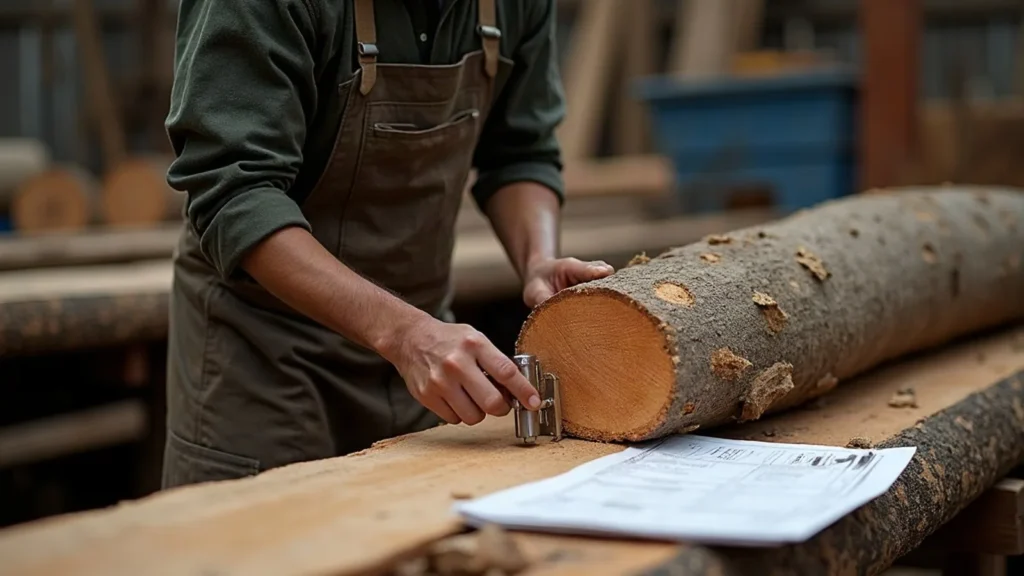
Timber legality rules have quietly split Sulawesi’s boatbuilding sector in two. Yards that can document their material chain are winning export and charter-standard work; yards that cannot are being pushed toward the informal end of the market. For an owner, knowing which side of that line a yard sits on is a shortlist criterion.
A traditional industry meeting a formal system
Beach-built timber boatbuilding in Sulawesi predates any modern regulatory framework by centuries. Timber was sourced locally, through relationships, without paperwork, and the craft was transmitted by apprenticeship rather than documentation.
Indonesia’s timber legality assurance system, SVLK, applies a formal audit and certification structure across the timber supply chain. Applying that to an informal, family-scale industry was always going to produce friction, and it has.
The compliance cost falls unevenly
Certification and documentation costs are broadly fixed rather than proportional to output, which means they land hardest on the smallest operators. A large processor absorbs them easily; a family sawmill supplying a handful of hulls a year does not.
The consequence is consolidation in the supply chain. Documented timber increasingly comes through a smaller number of larger suppliers, and the yards that have built relationships with those suppliers can quote reliably on documented material while others cannot.
What this means for lead times and price
Documented hardwood costs more and, at times, takes longer to obtain, because the pool of certified suppliers for a given species is narrower than the pool of all suppliers.
Owners should read a quotation that assumes documented timber and a quotation that does not as two different products. If the difference is not explicit in the specification, it will show up as a surprise later, usually at the worst moment.
The export effect
The clearest driver of formalisation is export. Timber products leaving Indonesia require the documentation, and yards that want export-bound work, or that build vessels intended for foreign flag, have had to organise their supply chains accordingly.
That has produced a genuine capability difference. A yard that routinely builds export-bound hulls has processes for material documentation that a purely domestic yard may never have needed to develop, and those processes are exactly what an owner is relying on at survey.
Where the sector is heading
The direction of travel is toward more documentation, not less, driven by export markets, insurers and charter clients rather than only by regulation. Charter guests and the operators who serve them increasingly ask questions about provenance that would have been unimaginable a generation ago.
For traditional yards, that is both a threat and an opportunity. The skill base is genuinely rare and internationally recognised, and yards that pair it with credible documentation are positioned for exactly the work that pays best.
How an owner should respond
Do not treat legality documentation as an add-on to be negotiated at the end. Put it in the specification, price it in the quotation, and verify it at milestone inspection.
And be realistic about what the certificate proves. SVLK verifies legality, which is a floor rather than a sustainability claim. An owner who wants more than the floor should ask about species status and source and accept a more complicated answer than a single document provides.
What owners can do that actually helps
Owners have more influence over this than they assume, because the yards respond to what clients specify and pay for. A client who writes documented timber into the specification, prices it honestly in the quotation and verifies it at inspection is directly funding the formal end of the supply chain.
A client who asks for the lowest hull price and does not mention documentation is funding the other end, whatever their stated views. This is not a moral argument so much as an observation about how a small industry responds to demand. The yards that have invested in documented supply chains did so because clients required it, and they will continue to only for as long as that requirement is real and paid for.
Frequently asked questions
Do all Sulawesi yards work with certified timber?
No. The sector is genuinely split, with yards that regularly build export-bound or charter-standard hulls having organised documented supply chains, while others continue to work informally. That is why timber documentation belongs in the shortlist criteria rather than being assumed.
Does certified timber cost much more?
It costs more and can take longer, because the certified supplier pool for a given species is narrower. The size of the difference varies by species and by how constrained supply is at the time. The important point is that a quotation assuming documented timber and one that does not are quoting different projects.
Is SVLK the same as a sustainability certification?
No. SVLK verifies legality of harvest and chain of custody within Indonesian law. It is not an ecological sustainability assessment, and legally harvested timber can still come from sources with varying environmental profiles. Owners who care about that should ask specifically about species status and source.
Has SVLK made building a boat in Sulawesi more expensive?
It has added documentation, lead time and a price premium on certified heavy hardwood, and that premium is real for keel-grade stock. Against the whole cost of a supervised charter vessel, however, the difference is small, and it buys legality that protects resale value and export options for the life of the boat. The expensive outcome is the opposite one: uncertified timber discovered at survey or sale.
Do yards now refuse uncertified timber on their own?
Practice varies by yard and by project. Commissioned builds under written contract increasingly specify documented stock because supervising owners demand it, while informal local work still moves on older habits. The reliable mechanism is not the yard’s habit but your contract: name SVLK-documented supply as a requirement, tie it to a milestone, and inspect the paperwork when the timber lands.
Talk to the Sulawesi Boat Builder desk
Send the vessel type, target length, intended operating area and your build or purchase window. We reply with the shortlist logic, the document set you will need, and the next verifiable step.
WhatsApp +6281139414563 · bd@juaraholding.com
Quotations, contracts and milestone schedules are issued in USD by PT Komodo Galangan Nusantara.